In this current situation, ensuring that you stay calm, control any anxiety and reduce the amount you are worrying is important. Everyone is trying to juggle so many tasks that your head becomes full, you begin to get anxious and then you lose focus. Taking just five minutes a day to focus on your wellbeing and the wellbeing of employees is important.
Here at SAM, wellbeing is very important. We encourage the development of a wellbeing strategy to support your employees which all works to reduce absence. That is why we have developed this series of five minute workouts, with the kind help of Tom Granger and his book, Draw Breath. The exercises below are directly from Tom’s book and if you would like to know more you can go to Tom’s website where you can buy the book and also access some free resources.
The exercises for today are designed to exercise your lungs and calm your mind and could be used with children as well if they become angry or confused emotionally as they to struggle to deal with current limitations. You could get them to draw the bubble, the bumblebee and the ocean and just take a moment to be calm and breathe. We hope you find these useful. Stay well and stay safe.
Resistance breathing to exercise the lungs and calm the mind
Softly restricting your breath by creating subtle resistance slows down your exhalation and creates gentle pressure in the lungs. Both of these factors activate the PNS. The conscious control and increased pressure strengthen your muscles, making you a more effective breather and protecting you from injury.*
Opting to breathe through the nose rather than the mouth is the simplest form of resistance breathing.
Nose breathing also has other benefits. Organic, spiralling pathways in the nasal cavity heat and cool the air as needed, while fine hair and mucus membranes filter the air, acting as a natural defence protecting the lungs from harmful dust and bacteria.
Exercise one – Blow bubbles
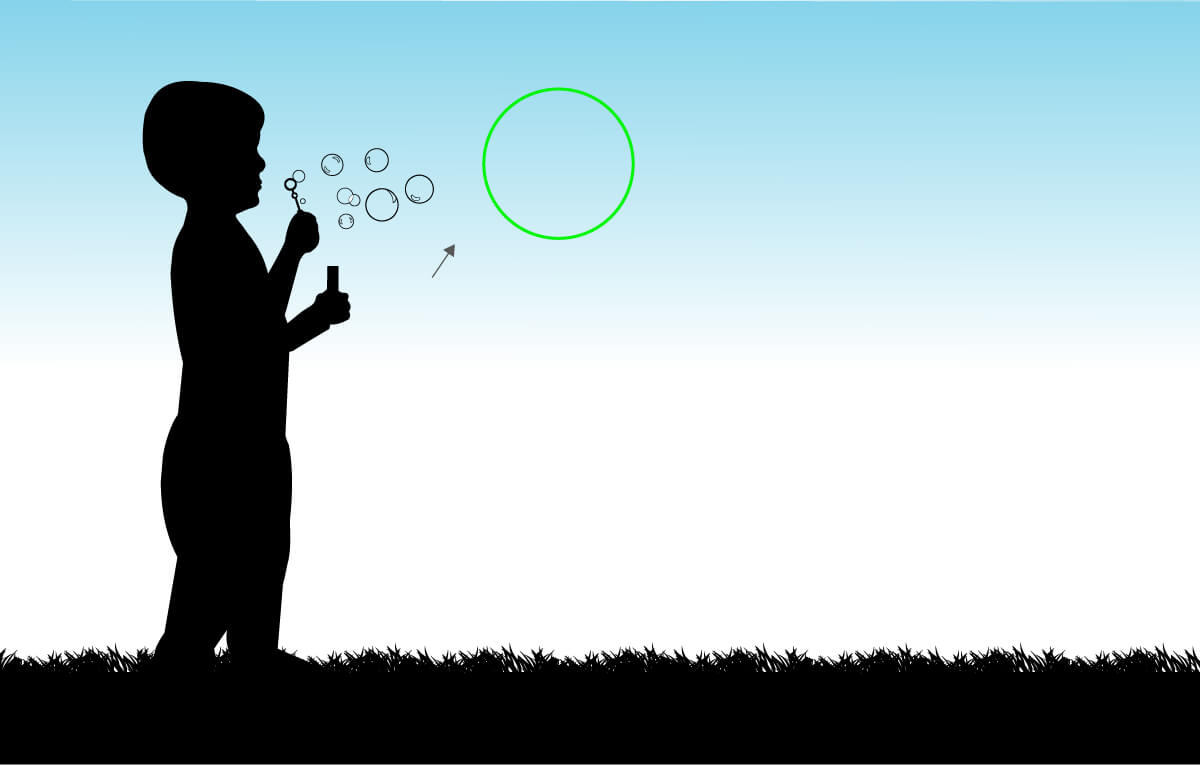
- Purse your lips as you exhale and blow slowly and smoothly, as though you are carefully blowing bubbles.
- Inhaling through the nose and exhaling through pursed lips, draw bubbles on a piece of paper.
You could use this with children getting them to blow real bubbles and then practicing breathing and drawing the bubbles they have just created.
Exercise two – Good vibes
Singing, chanting and humming all forms of resistance breathing. You create sound in your throat by tightening your vocal chords and restricting the flow of air. As well as creating naturally soothing vibrations, these activities cause you to simultaneously slow down your breath rate and increase the ratio of your exhalation; two alterations to our breathing pattern that stimulate the PNS.
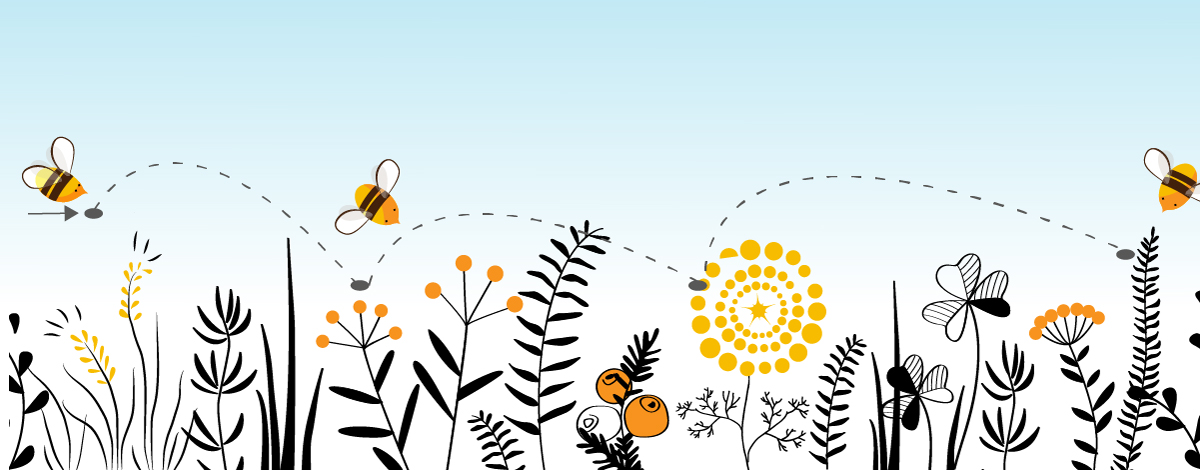
- Help this bumblebee have a smooth landing on each of these flowers by humming a low note on your exhalation, making it naturally smoother and longer.
- During vibrational breathing exercises, sounds travel down the body and cause your organs to vibrate. See if you can feel the vibrations in your extremities, your shoulders, elbows, forearms and fingers. What about your feet? The lower the tone of your hum, the further the vibrations will travel.
When we are stressed, we unconsciously prioritise our inhalations.This is the body preparing us to run away from the threats. When we are stressed all the time, breathing like this means the muscles we use to exhale become weaker. Resistance and vibrational breathing exercises strengthen these muscles with slow controlled exhalations.
Exercise three – Ocean breathing
Ujjayi breath (pronounced oo-jai) sometimes called “Ocean breathing”, is the yogic practice of creating resistance at the back of the throat while breathing through your nose.
- Inhale through your nose.
- Open your mouth and breathe out as though you are fogging up a mirror, then, without stopping your exhalation, close your mouth.
- Notice how the breath now comes out of your nose, making a soft sound? Retain this resistance in your throat to create the same, slightly quieter, sound on your next inhalation. This subtle resistance is Ujjayi breathing.
- The sound should be soft like a baby snoring or peaceful waves lapping the shore. Practice ujjayi breathing through your nose while drawing the waves lapping on the shoreline.
- See if you can match the sound of your pencil moving across the page with the sound of your inhalation and exhalation.
The purpose is to create delicate resistance, naturally drawing your attention to and lengthening the breath cycle. Making rough snoring sounds like a chainsaw won’t be relaxing and can damage the delegate membranes in your nose.

This blog is a direct feature from the book ‘Draw Breath: The Art of Breathing’, written by Tom Granger. If you would like to purchase the book please follow this link. We would like to thank Tom for letting us feature this extract.
You can find the rest of SAM’s Wellbeing Workouts on our website here are just a few to get you started. Your can also find these on SAMconnect our employee communication app. If you would like to know more about this. which is available for free until September, please contact us.
SAM’s 5 Minute Wellbeing Workout – Fight or Flight vs Rest and Digest
SAM’s 5 Minute Wellbeing Workout – What Does Healthy Breathing Look Like?
*Calabrese, Pascal, et al.”Cardiorespiratory interactions during resistive load breathing”. American Journal of Physiology – Regulatory, Integrative and Comparative Physiology. 279.6 (2000) R2208-R2213 – as featured in ‘Draw Breath: The Art of Breathing’, by Tom Granger.