With the number of secondary schools open reducing to 84%* and Headteachers concerned about teacher shortage**, it is obvious that absence is rising in schools due to both illness and isolation. It is so important to ensure that your absence management policy has been updated and that you are clear on how to manage absence due to COVID.
You should review your policy and consider adding an Addendum to cover current circumstances including the new NHS Test and Trace app and expected behaviour. By adding an Addendum it makes it easier to remove, when hopefully we get to the point when we don’t need to have the extra measures. As with any policy update it should be circulated to all members of staff.
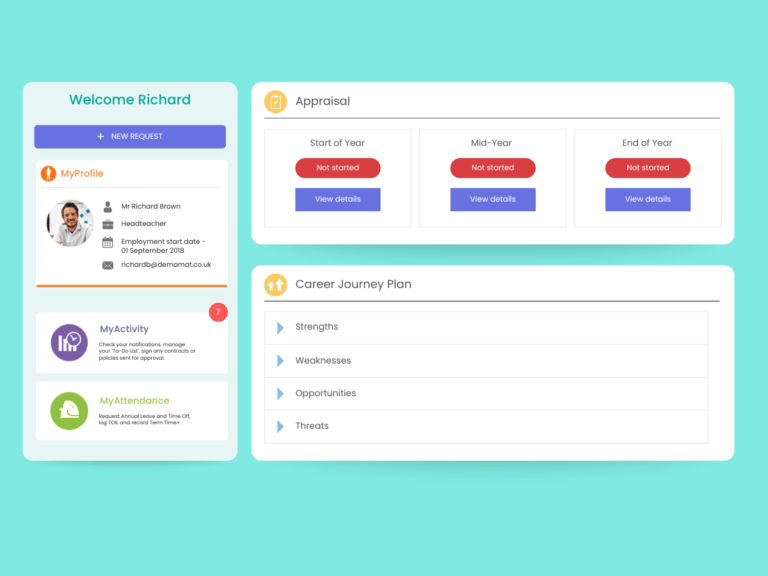
As absence specialists, SAM has collated along with our sister company FusionHR a series of questions in relation to absence and COVID to help our clients. SAM has a COVID dashboard which helps you to keep track of all these scenarios and to ensure that you are monitoring action taken. If you don’t currently use SAM, see how the system could help you by booking a place on our next webinar.
When should a staff member isolate and how long for?
With the isolation rules a member of staff must isolate:
- when pending a test, until confirmed as negative.
- when they have symptoms for at least 10 days.
- If they have had an unclear, void, borderline or inconclusive result. They must get another test. If they had a test because of symptoms, they must keep self-isolating and have another test within 8 days of symptoms starting. If they are not able to have another test in time, they must self-isolate for at least 10 days from when symptoms started. Anyone they live with, and anyone in their support bubble, must self-isolate for 14 days.
- when they have been asked to isolate by Test and Trace or the NHS app for 14 days unless otherwise specified.
- when someone they live with has symptoms or is pending a test for at least 14 days or until a negative test is received. You don’t need to isolate if someone in your household has been contacted by test and trace, only if they have symptoms or a positive test.
- when they are awaiting a surgical procedure. You can request evidence of this.
They must also isolate:
- 10 days after a positive test.
- After a period of isolation ends the employee must also wait 48 hours after a temperature returns to normal before leaving isolation.
So if you have a combined factor of any of the above, you could have a member of staff absent for nearly a month. Usual sick pay will apply in these cases. Low earning staff would also benefit from the £500 COVID payment. You can find out more about that here.
Government have this week encouraged employees to work from home where possible. Obviously, this is only if it is not at detriment to the business or they are a key worker like schools.
How should you manage an employee who has received a negative test?
The employee does not need to self-isolate if the test is negative, as long as:
- everyone they live with who had symptoms tests negative
- everyone in their support bubble who has symptoms tests negative
- they were not told to self-isolate for 14 days by NHS Test and Trace or the NHS app
- they feel well and have not had a temperature within 48 hours
As per usual guidance if they have diarrhoea or are being sick, stay at home until 48 hours after they’ve stopped. As an employer you should have a discussion with the staff member prior to their return to ensure the necessary conditions. We would recommend that you confirm this conversation in writing and add it to your absence system or record. In SAM you can upload documents or add a note which reflects the conversation and then any Return to Work that is completed can be done in the system and shared with the employee on the Employee Portal.
How do you manage an employee who cannot attend work because of a child being sent home?
If a staff member has a child sent home due to a bubble closure then the employee does not have to self-isolate but the child does. If the child is under the legal age to be left alone then an adult must isolate with them. If the child starts to show symptoms, they must apply for a test and the whole family must isolate as per the guidelines mentioned above.
In terms of paying them for their absence it is really dependant upon your policies. As an Employer you may grant dependent leave in your contracts and this could be used in the case of caring for a dependant, if they are at home with no symptoms. Burgundy book gives 2 days for dependant leave but you need to check your own policy.
If they have symptoms and the household have to isolate then sick pay would be payable. Emergency leave arrangements will take effect but flexibility by employers is required. An alternative is to use parental leave, although 21 days’ notice usually required employers may want to relax this.
What do I say to a staff member who is planning a holiday at half-term?
Decide how you are going to deal with holidays and communicate this to staff. As safe zones are changing all the time, they need to consider what will happen in all scenarios. You can warn staff how this will be dealt with, so for example, if they go and have to isolate, the isolation will be unpaid. FCO advice is not to undertake non-essential travel during the pandemic. In any case staff shouldn’t be booking holidays to areas that are not deemed safe. Discuss with staff who have pre-booked holidays if it possible to change or postpone their trip.
For schools, where it is not possible to avoid a member of staff having to quarantine during term time, school leaders should consider if it is possible to temporarily amend working arrangements to enable them to work from home.
How does an employee have to notify us of symptoms or isolation?
Staff members who have symptoms, have received a positive test result or have been told to self-isolate must notify the employer on day 1. You may wish to include additional specific information or just refer to “usual notification rules apply”.
- Staff must keep the employer updated if they are likely to be absent more than 14 days.
- They will not be able to visit GP for fit note but can be asked to show test results and can also obtain a self-isolation note https://111.nhs.uk/isolation-note.
We don’t recommend that you start dictating what your staff can do in their own time, other than reminding them that they should follow all national and local rules on social distancing and wear masks inside shops and takeaways and when travelling on public transport.
You cannot tell people what to do outside of work but you can advise them that they should abide by the guidelines and if they don’t it may bring the organisation or school into disrepute. Should this happen you are able to consider whether any disciplinary action needs to be taken. It may be advised to warn staff of this approach.
What does ‘close contact’ mean?
If a staff member has been in close contact with someone suspected of COVID, there is no need to self-isolate unless they develop symptoms or are asked to self-isolate by NHS Test and Trace or the app (this will only happen if contact has tested positive). In schools the health protection team will provide definitive advice on who should be sent home.
Broadly in a work context, a close contact is a person who has had face to face contact (within one metre) of the person who has tested positive for coronavirus including, being coughed on, having skin to skin contact or contact within one metre for one minute. It also includes people who have been within two metres for more than 15 minutes of the person testing positive or has travelled in a small vehicle, such as a car (even on a short journey) or a plane.
If you have any questions about managing absence related to COVID, please speak to your HR consultant or get in touch with our sister company FusionHR on 01924 827869. You may also find their Q and As a useful resource. If you would like to know more about the SAM system and how it can benefit your school, call 01924 907319.
* https://edexec.co.uk/unions-comment-on-increase-in-school-closures/